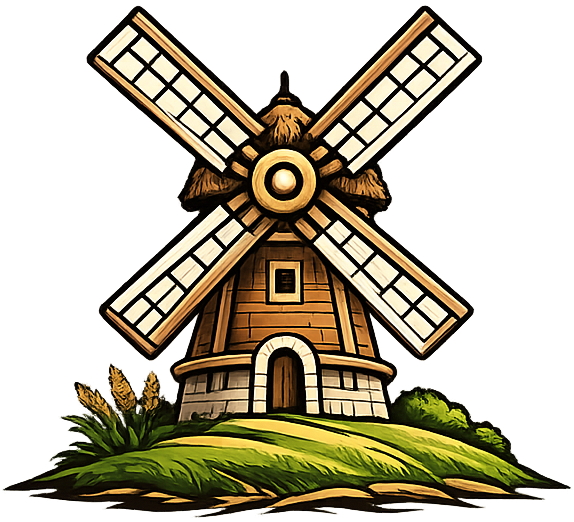
From Windmill to Wind Turbine: The Evolution of Wind Power
When you see a modern wind turbine spinning on a hillside, you're looking at the latest chapter in a story that began over 800 years ago. The basic principle hasn't changed: capture the energy of moving air and convert it into useful work. But the technology has evolved from wooden sails and stone gears to carbon-fiber blades and rare-earth magnets. It's a remarkable journey of human ingenuity.
A Timeline of Wind Power
Persian Windmills
The earliest known windmills appeared in Persia (modern Iran). These "panemone" mills used vertical sails rotating around a vertical axis - fundamentally different from European designs. They ground grain and pumped water in the arid Iranian plateau.
European Post Mills
The first European windmills appeared in England and France. These post mills had horizontal axes and could be rotated to face the wind - a design breakthrough that dramatically increased efficiency.
The Golden Age
Windmills reached their peak of sophistication. Tower mills, smock mills, and fantail mechanisms allowed automatic wind tracking. The Dutch alone operated over 10,000 windmills at peak, powering everything from grain milling to sawmills to drainage pumps.
First Wind Electricity
James Blyth in Scotland built the first windmill to generate electricity, powering the lights in his cottage. Shortly after, American inventor Charles Brush built a larger machine in Cleveland, Ohio. The transition from mechanical to electrical power had begun.
First Megawatt Turbine
The Smith-Putnam wind turbine in Vermont was the first to generate 1 megawatt of electricity. Its 53-meter diameter rotor was enormous for the time, though small by modern standards.
First Offshore Wind Farm
Denmark built the world's first offshore wind farm at Vindeby. Eleven turbines produced enough electricity for around 2,200 homes. The era of industrial offshore wind had begun.
Giants of the Sea
Modern offshore turbines stand over 260 meters tall with blade spans exceeding 220 meters. A single turbine can power over 16,000 homes. Global wind capacity exceeds 900 GW - enough to power hundreds of millions of homes.
Old Mills vs New Turbines
| Feature | Traditional Windmill | Modern Wind Turbine |
|---|---|---|
| Height | 15-25 meters | 150-260 meters |
| Blade span | 20-30 meters | 120-220+ meters |
| Power output | 30-40 horsepower | 15-16 megawatts |
| Blades | 4 (wood and canvas) | 3 (fiberglass/carbon fiber) |
| Wind tracking | Manual or fantail | Computer-controlled yaw motors |
| Output type | Mechanical (grinding, pumping) | Electricity |
What the Old Can Teach the New
Traditional windmills offer surprisingly relevant lessons for modern wind energy:
Community Acceptance
Traditional windmills were beloved community landmarks. Modern wind farms often face opposition. The difference? Old mills were local, human-scaled, and served the immediate community. There are lessons here about how to integrate wind energy into landscapes and communities.
Sustainability
Traditional windmills were built from local, renewable materials and lasted centuries with maintenance. Modern turbines use concrete, steel, and composite materials with 20-25 year lifespans. The long-term sustainability equation isn't as simple as it seems.
Repairability
A traditional miller could repair almost every part of their mill. Modern turbines require specialized teams and heavy equipment. There's value in designing for local maintainability.
Beauty
No one protests against a beautiful old windmill. As wind energy grows, investing in the aesthetic design of turbines and their integration into landscapes could dramatically improve public acceptance.
The connection is real: Denmark, the Netherlands, and Germany - countries with the strongest windmill traditions - are also world leaders in modern wind energy. The cultural comfort with wind power, built over centuries of living alongside windmills, translates directly into modern policy and public acceptance.
From a wooden post mill grinding grain in 12th-century England to a 260-meter offshore turbine powering thousands of homes, the story of wind power is one of continuous human innovation. The old mills are where it all started - and understanding them enriches our appreciation of where it's going.
Where it all began
Explore historic windmills - the ancestors of modern wind energy - on our index.
Browse All MillsMay your sails always catch the wind,
The Mill Index Team